

Why Algeria
Algeria: A World Waiting to Be Discovered
A Mediterranean shore, Roman cities, old medinas, high mountains and the vast Sahara, in a country that still feels like a discovery.
Between the Mediterranean and the heart of the Sahara, Algeria brings together worlds that rarely share a single country.
Along the coast, green hills fall to quiet coves and the ruins of ancient ports. Inland, Roman cities stand in open countryside, and medinas keep centuries of craft and faith within their walls. Further south, mountains give way to the desert: oases, dunes and plateaus carved by the wind. This page walks you through them, chapter by chapter.
Chapter 01
The Mediterranean coast
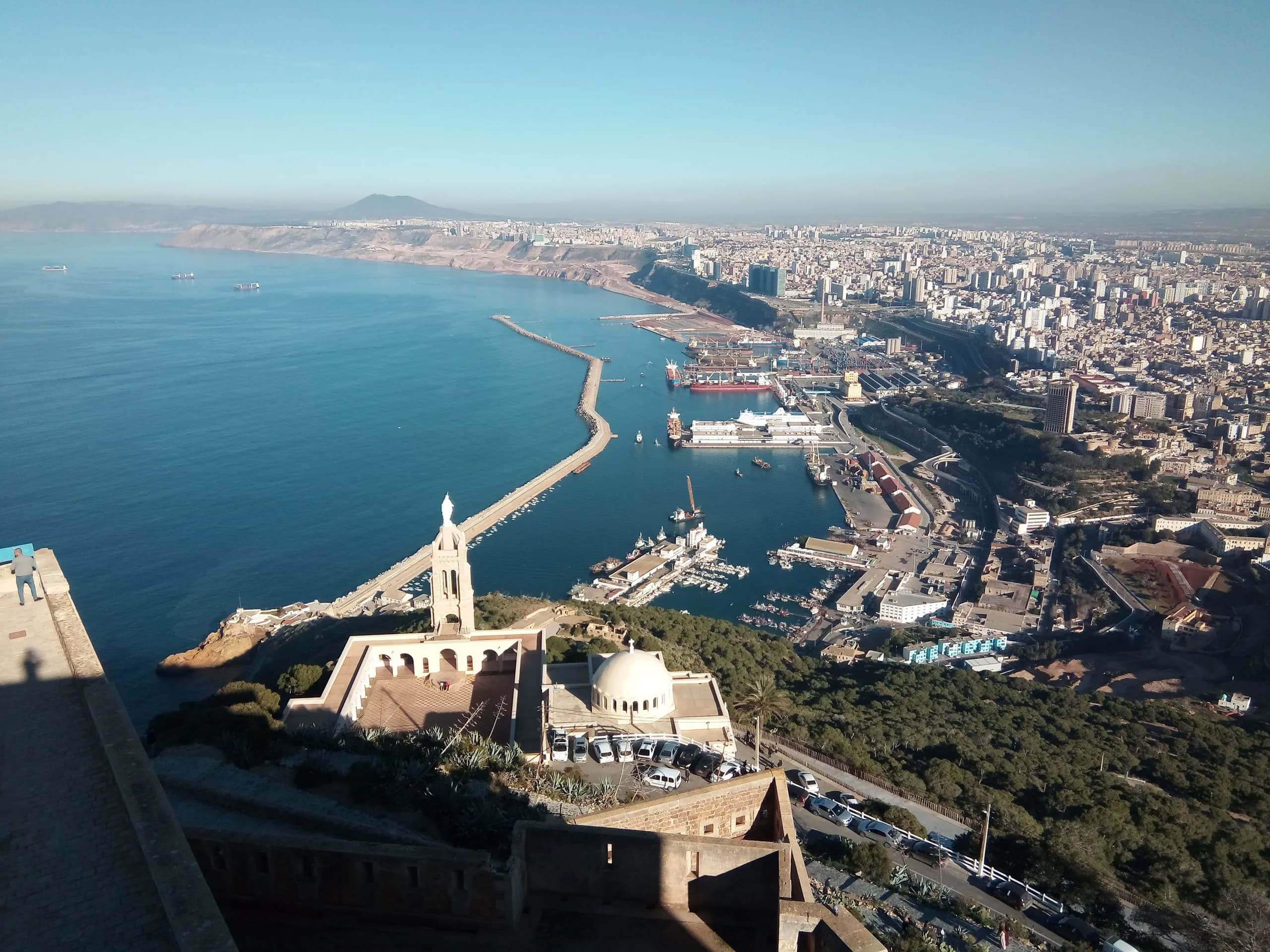
Algeria’s northern edge is a long Mediterranean shoreline of bays, cliffs and fishing harbours, with mountains often rising straight behind the beaches.
Around Béjaïa, forested headlands drop into clear water; west of Algiers, the Roman ruins of Tipasa sit at the edge of the sea; and Oran opens onto its wide bay. Days here move at the pace of the coast: a swim, a seafood lunch, a walk along the corniche at sunset.
Chapter 02
Roman heritage
Algeria holds some of the most complete Roman towns in North Africa, their streets, theatres and baths still laid out across the land.
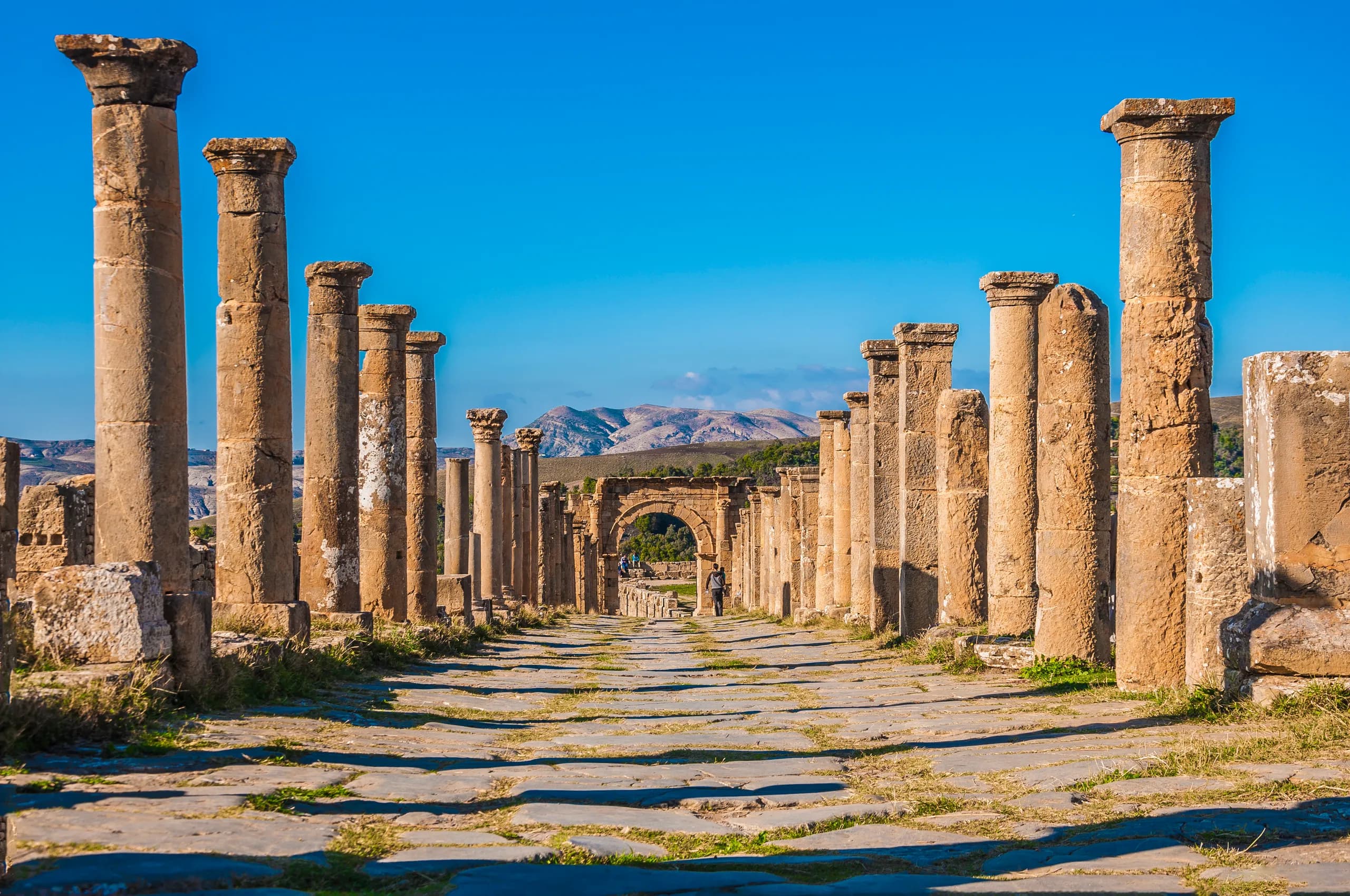
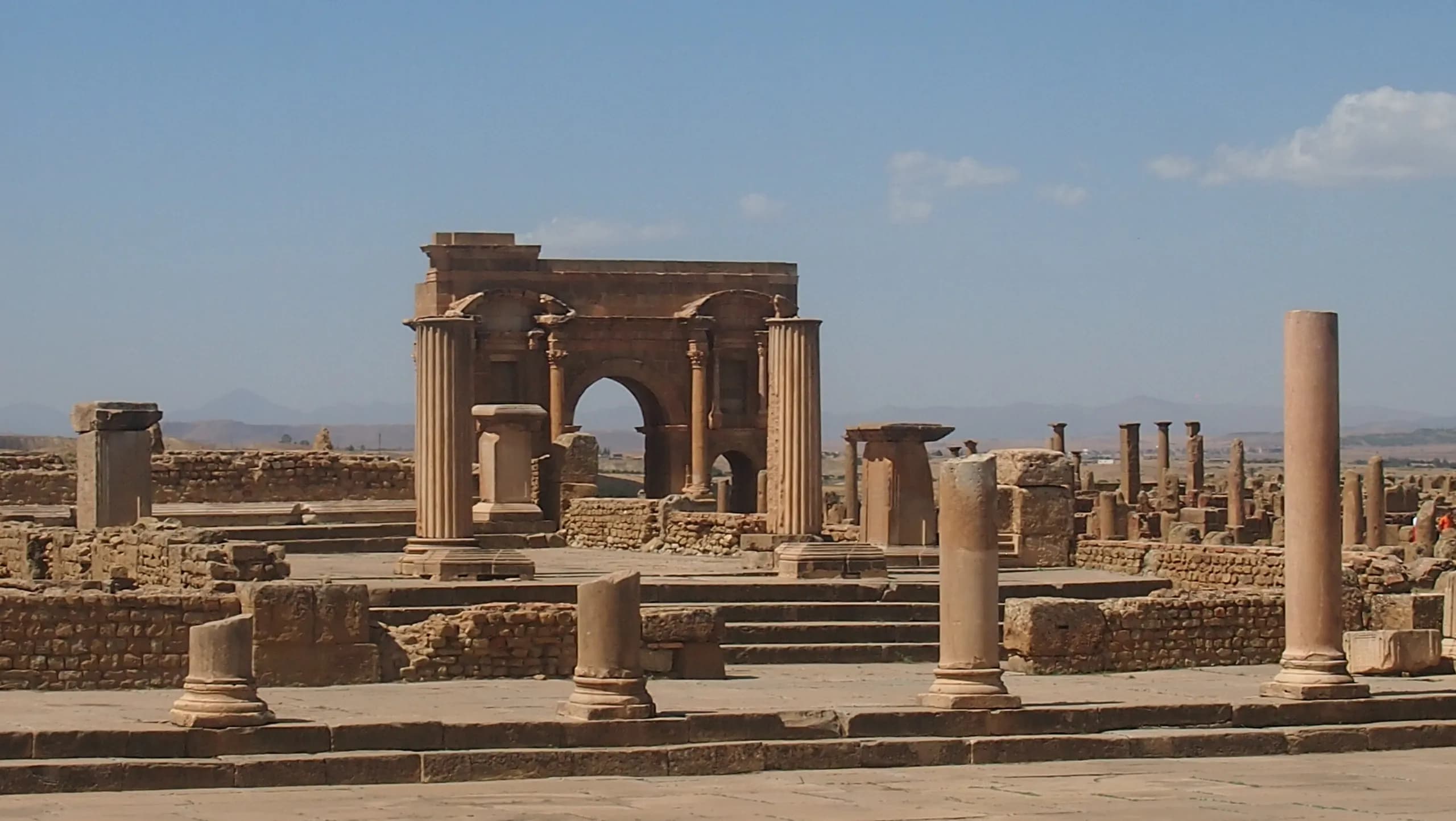
At Timgad, a colonnaded street leads to a triumphal arch in a city laid out on a grid. At Djémila, temples, baths and a forum follow a mountain ridge. At Tipasa, Punic, Roman and early Christian remains stand among the pines above the sea.
Chapter 03
Cities and medinas
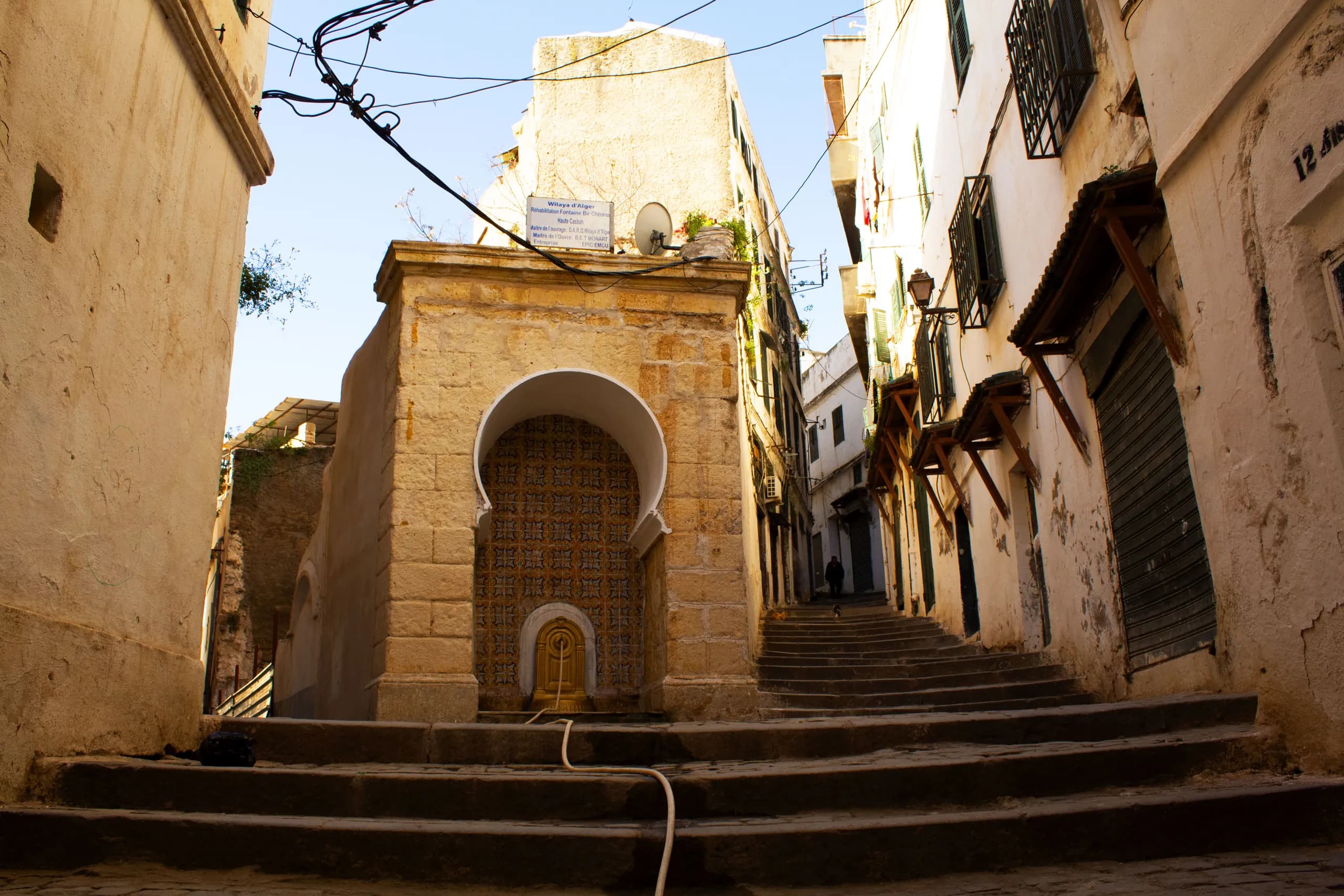
In Algiers, the Kasbah climbs the hillside above the bay in a maze of stairs, carved doors and hidden courtyards, below the white façades of the city that grew around it.
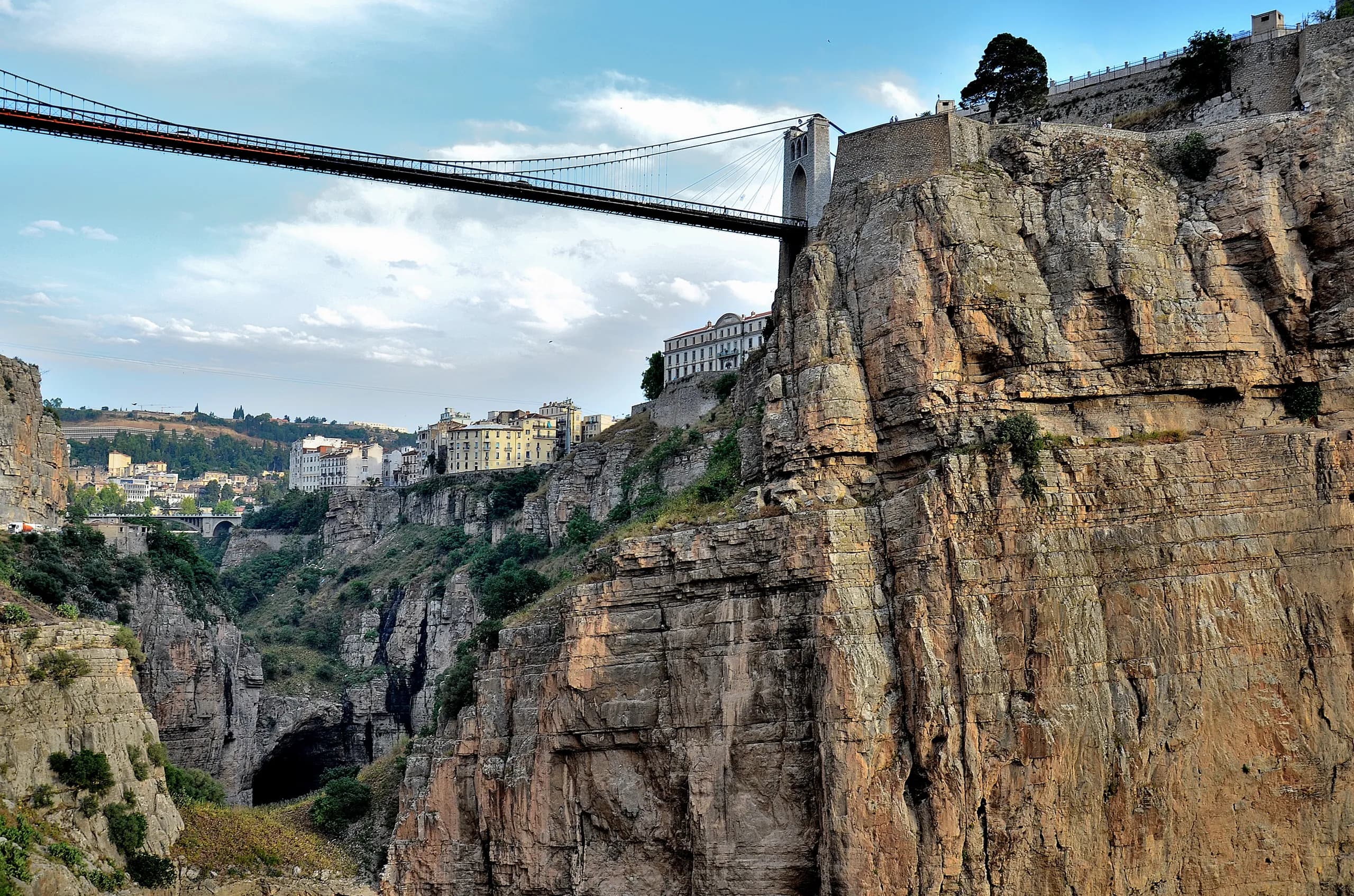
Constantine is built on a rock split by a deep gorge, its quarters joined by bridges. In the M’Zab Valley, the towns of Ghardaïa rise around their mosques, following a way of building passed down through generations.
Algeria is not one landscape but many, and each keeps its own rhythm.
Chapter 04
Mountains
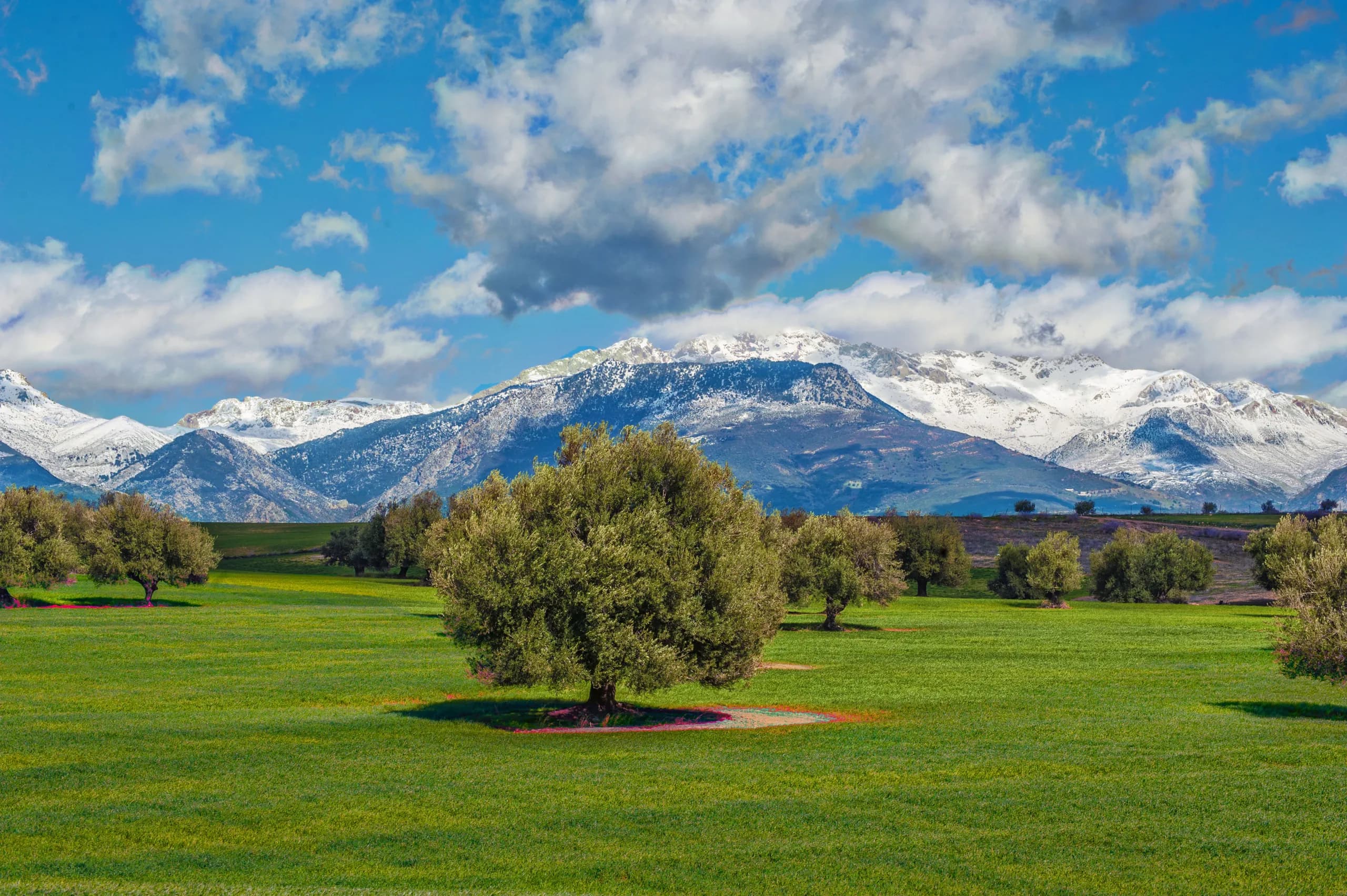
Behind the coast, the Djurdjura range rises over the villages of Kabylie, with cedar forests, ridgeline trails and snow on the high peaks in winter.
Further east, the Aurès hide canyons, terraced villages and gorges lined with palms. Deep in the south, the volcanic peaks of the Hoggar stand above the desert, a landscape unlike any other in the country.
Chapter 05
The Sahara
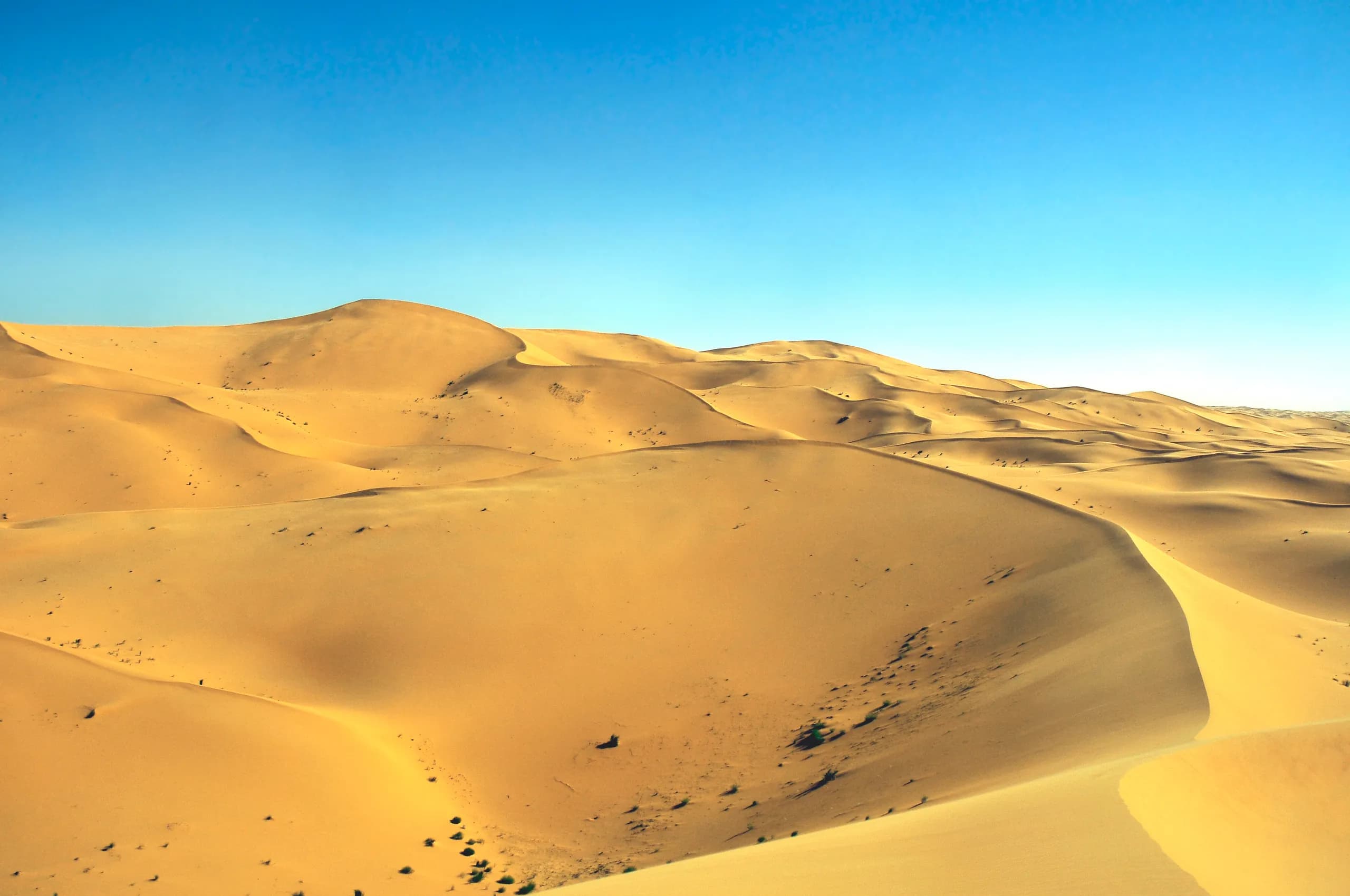
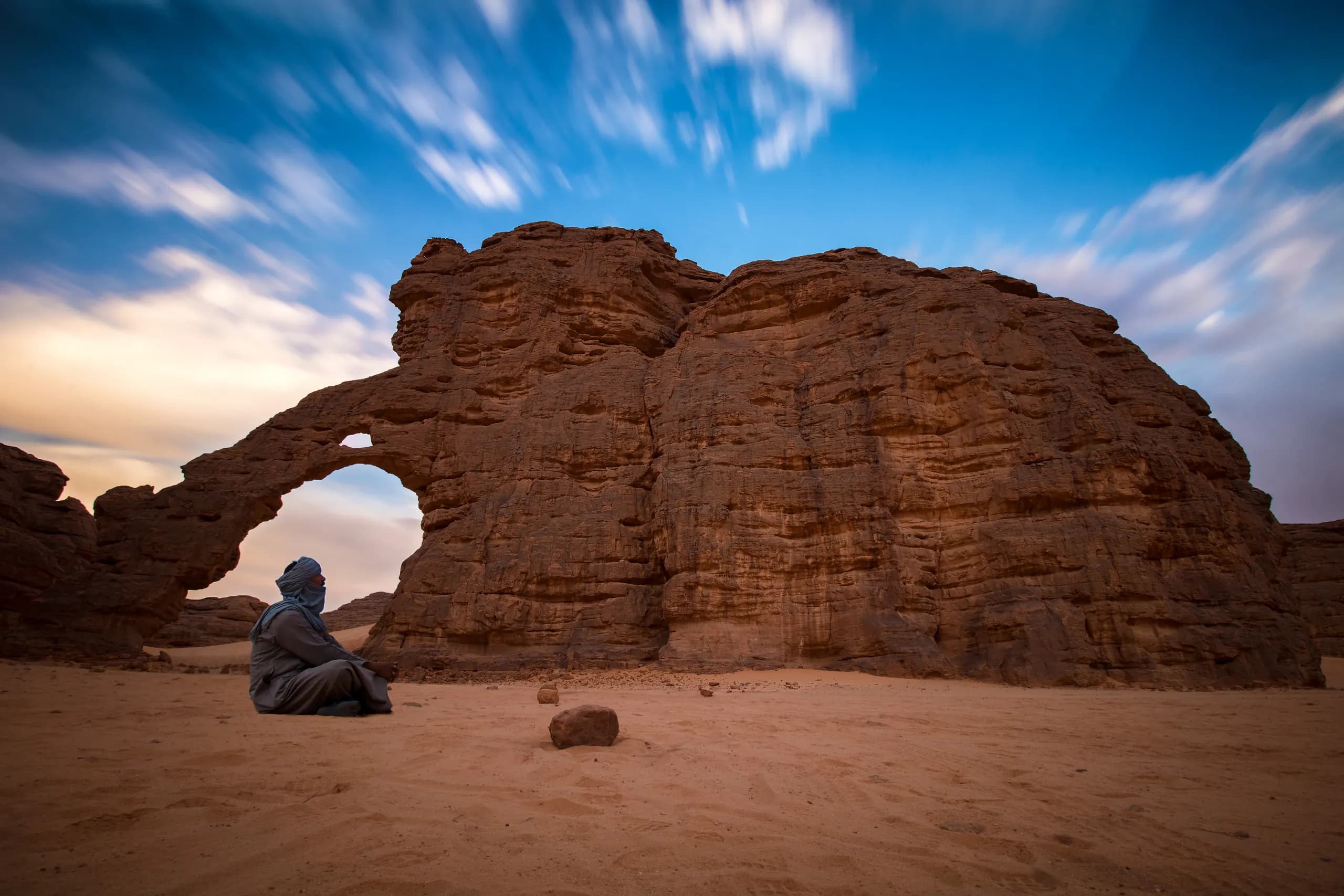
The Sahara covers most of Algeria, and it is far more than sand: dune seas that change colour through the day, oasis towns built of red earth, and stone plateaus shaped into arches and pillars by the wind.
Around Djanet, the Tassili n’Ajjer holds one of the world’s great collections of prehistoric rock art. In Timimoun, red ksour look out over the dunes of the Grand Erg. And at night, far from any city, the sky fills with stars.
Chapter 06
Culture, hospitality and cuisine
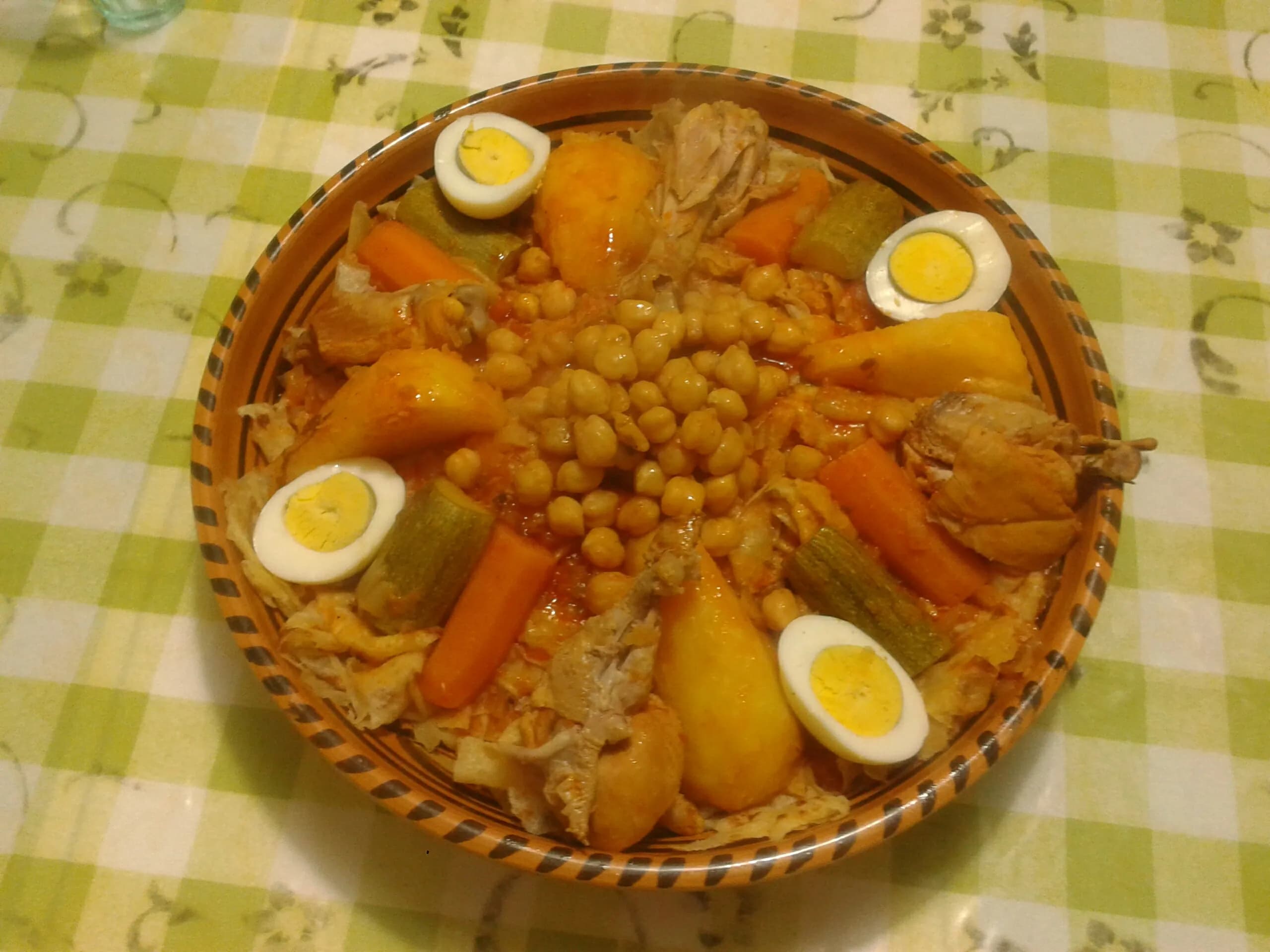
Algerian culture weaves together Amazigh, Arab, Andalusian, Ottoman and Mediterranean influences, heard in its music, seen in its crafts and felt in its welcome. A guest is rarely left without a glass of mint tea, or a coffee and something sweet.
Every region has its own table: couscous in its many local versions, chakhchoukha in the east, slow-cooked tajines and bread fresh from the oven. Sharing a meal is often the best way into the country.
Here, hospitality is not a service. It is a way of life.
World Heritage
Seven UNESCO World Heritage sites
From Roman towns to Saharan rock art, Algeria’s World Heritage sites tell the many chapters of its history.
- 01
Al Qal’a of Beni Hammad
M’Sila Province
The ruined first capital of the Hammadid dynasty, in a mountain setting, where the minaret of its great mosque still stands.
Ready to see it for yourself?
Our journeys bring these places together, from the coast to the deep Sahara.
Explore our packages